
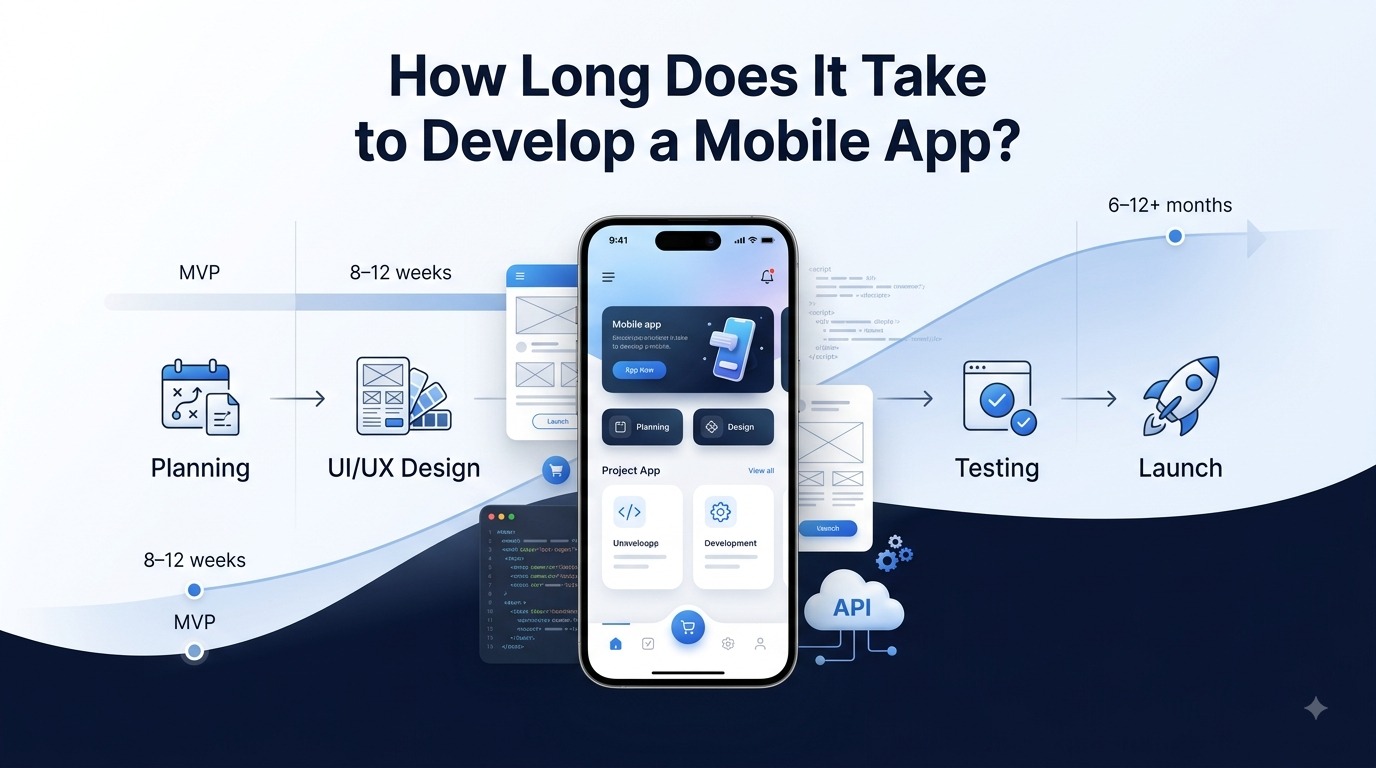
A mobile app typically takes 2 to 6 months to develop, while a simple MVP may take around 8 to 12 weeks and a complex app with advanced features can take 6 to 12 months or longer.
The exact mobile app development timeline depends on the number of features, platforms, integrations, backend requirements, UI/UX complexity, testing, and how quickly decisions and feedback are provided.
A realistic project usually moves through planning, design, development, testing, and launch rather than jumping straight into coding.
At Copixel, we focus on defining the scope before development begins. This gives businesses a clearer timeline, prevents unnecessary delays, and helps the development team build the right product from the start.
What Is the Average Mobile App Development Timeline?
There is no single timeline that fits every mobile app.
A basic app with a limited number of screens and straightforward functionality may take 8 to 12 weeks. A medium-complexity app with user accounts, APIs, databases, payments, notifications, and custom workflows often takes 3 to 6 months.
Large applications with multiple user roles, complex backend systems, real-time features, third-party integrations, or advanced security requirements may take 6 to 12 months or more.
The important point is that development speed should not be measured by coding time alone. Planning, design, testing, revisions, and deployment all affect the final launch date.
What Are the Main Stages of Mobile App Development?
The development timeline becomes easier to understand when you break the project into stages.
How Long Does App Planning Take?
Planning usually takes 1 to 3 weeks.
This stage defines what the app needs to accomplish, who will use it, which features belong in the first release, and what technology the project requires.
The team may review business requirements, user flows, technical requirements, integrations, and the minimum viable product (MVP) scope.
Good planning reduces expensive changes later. A feature that looks simple during an initial conversation may require additional backend work, APIs, security controls, or third-party services.
How Long Does UI/UX Design Take?
UI/UX design generally takes 2 to 4 weeks, depending on the size and complexity of the app.
Designers create wireframes, screen layouts, navigation flows, interactive prototypes, and the visual design system. This stage gives stakeholders something concrete to review before development begins.
A well-planned design also helps developers understand exactly how each screen should behave.
How Long Does Mobile App Development Take?
Development is usually the longest part of the project. It can take several weeks to several months, depending on the feature set and technical requirements.
Developers build the frontend that users interact with and the backend that handles data, authentication, business logic, APIs, and other services.
The timeline becomes longer when an app needs features such as:
- User registration and authentication
- Payment processing
- GPS and location services
- Real-time messaging
- Push notifications
- Custom dashboards
- E-commerce functionality
- AI-powered features
- Third-party API integrations
- Multiple user roles
- Complex databases
The more systems an app needs to connect, the more development and testing it usually requires.
How Long Does Mobile App Testing Take?
Testing commonly takes 2 to 6 weeks, although testing often happens alongside development rather than only after coding is finished.
QA teams test the application across supported devices and operating systems. They check functionality, navigation, performance, security, compatibility, and usability.
Testing matters because an app that works on one device may behave differently on another. Finding those problems before launch is much less costly than discovering them through customer complaints.
How Long Does App Launch Take?
Deployment may take 1 to 3 weeks, depending on the project and release requirements.
The final stage includes preparing production builds, app store information, screenshots, testing the release version, and submitting the application to the appropriate stores.
Launch is not the end of development. After release, developers monitor performance, fix issues, review feedback, and plan future updates.
What Factors Affect How Long It Takes to Develop an App?
The biggest factor is scope.A calculator app and a multi-vendor marketplace may both be called “mobile apps,” but their development requirements are completely different.
The number of screens, user roles, integrations, backend services, animations, security requirements, and custom features all affect the timeline.
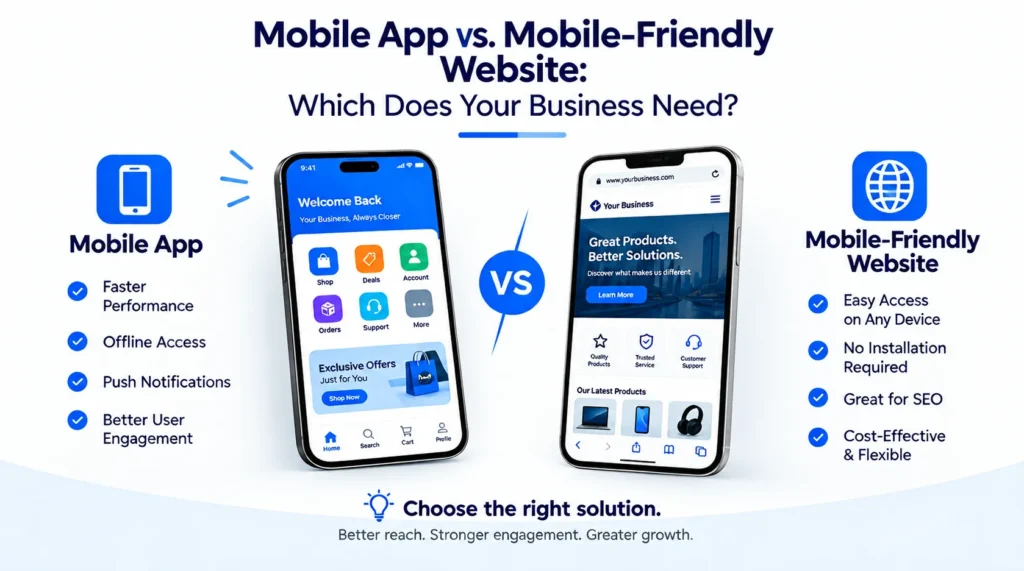
The choice between native and cross-platform development can matter too. Building separately for iOS and Android may require more development work, while cross-platform approaches can allow teams to share parts of the codebase. The right approach depends on the app’s requirements rather than simply choosing whichever option appears faster.
Your content and assets matter as well. Delayed decisions about branding, copy, images, functionality, or integrations can hold up development.
Can Adding More Features Delay App Development?
Yes. Adding features during development can extend the timeline.
This is one of the most common reasons an app project takes longer than originally planned. A new feature rarely affects just one screen. It may require changes to the database, backend, APIs, user flow, design, testing, and security.
For example, adding online payments may involve payment gateway integration, transaction handling, error states, security checks, testing, and updated user interfaces.
That’s why Copixel recommends defining the MVP before development begins. Businesses can launch the essential version first and use later releases to introduce additional features based on real user feedback.
How Does the Type of App Change the Development Timeline?
Different app categories require different amounts of development work.
A simple business information app may have a relatively short development timeline because it has limited functionality.
An e-commerce app requires product catalogs, search, accounts, shopping carts, payments, orders, notifications, and backend management.
A social networking app requires profiles, content management, messaging, notifications, moderation, databases, and potentially real-time functionality.
A marketplace is more complex because it may need separate experiences for customers, vendors, administrators, payments, orders, listings, reviews, and reporting.
The type of app therefore gives you a better starting point for estimating time than the word “app” alone.
Does Developing for iOS and Android Take Longer?
It can.
Building a native app separately for iOS and Android means development teams may need to create and maintain platform-specific implementations.
Cross-platform development can reduce duplicated work by allowing developers to share a significant portion of the application code. However, platform-specific functionality can still require additional development and testing.
The best choice depends on your target users, required features, performance expectations, budget, and long-term product plans.
How Can You Reduce the Mobile App Development Timeline?
The fastest way to reduce unnecessary delays is to reduce uncertainty before development starts.
Start with a clearly defined MVP. Finalize the core features before coding. Prepare brand assets and content early. Decide which platforms you need. Identify third-party integrations at the planning stage. Keep a clear approval process so developers are not waiting days for feedback.
Avoid trying to launch every possible feature in version one.
A focused first release gives your business a working product sooner. You can then improve the app using actual customer feedback instead of spending months building features users may never need.
How Does Copixel Keep App Development Projects on Track?
Copixel approaches mobile app development as a structured process rather than simply writing code.
We start by understanding the business goal, target users, required features, and technical requirements. From there, the project moves through planning, UI/UX design, development, testing, and deployment.
This approach gives every stage a clear purpose. It also makes it easier to identify scope changes before they become expensive delays.
Whether you need a focused MVP or a more complex mobile application, Copixel can help you define the scope and create a realistic development roadmap.
Have a mobile app idea but don’t know how long it will take? Talk to Copixel about your project, and we’ll help you understand the features, development process, and realistic timeline before development begins.
What Should You Know Before Starting Mobile App Development?
The most important thing is that a realistic timeline starts with a realistic scope.
A simple MVP may be ready in a few months, while a feature-rich application can require considerably more time. Current industry estimates put many full mobile app projects somewhere between roughly 20 and 40 weeks, while focused MVPs can be completed considerably faster.
Instead of asking only, “How quickly can you build my app?” ask what needs to be built, why each feature matters, and what version should launch first.
That is where a clear development plan makes the biggest difference.
Frequently Asked Questions
How long does it take to build a simple mobile app?
A simple app can take around 8 to 12 weeks when it has a focused feature set and limited integrations.
How long does it take to build a complex mobile app?
A complex application may take 6 to 12 months or longer, especially with advanced features, integrations, and backend requirements.
Does app design increase the development timeline?
Yes. UI/UX design requires planning, wireframes, prototypes, and visual design before or alongside development.
Can Copixel develop both iOS and Android apps?
Yes. The appropriate development approach depends on your features, target users, budget, and platform requirements.
What is the first step in developing a mobile app?
The first step is defining the app’s purpose, users, core features, and MVP scope so the development team can create a realistic roadmap.





No comment