
What Is the Mobile App Development Process From Idea to Launch?
The mobile app development process turns an initial idea into a working application through planning, design, development, testing, deployment, and ongoing improvement. A strong process keeps the project focused and gives each stage a clear purpose.
Building an app is more than writing code. The team needs to understand the target users, define the right features, design the experience, choose the technology, build the application, test every major function, and prepare it for launch.
A clear process helps businesses move from an idea to a mobile product that people can actually use.
What Happens Before Mobile App Development Begins?
The process starts by defining the app idea, target audience, business goal, and core problem the application should solve.
An app should have a clear reason for existing. The development team needs to understand what users need and what the business wants to achieve.
This stage may include competitor research, audience analysis, feature planning, platform selection, and MVP planning.
For example, a restaurant may want an app for direct ordering. Its first version may focus on menus, customer accounts, online payments, order management, and notifications rather than adding every possible feature at launch.
A clear starting point gives the project a defined direction.
How Is the App Idea Turned Into a Product Plan?
The idea becomes a product plan by defining the app’s features, user journeys, technical requirements, and development priorities.
The team maps how users will interact with the application.
A typical journey may look like this:
Open the app → create an account → browse products → select an item → complete payment → receive confirmation.
Mapping these actions helps identify the screens, functions, backend requirements, and integrations needed for the application.
It further helps separate essential features from features that belong in later releases.
How Does UI/UX Design Fit Into the Process?
UI/UX design turns the product plan into an interface that users can understand and navigate.
UX design focuses on how the application works. UI design focuses on how the screens look and how users interact with visual elements.
The team may create wireframes before developing detailed visual designs. These wireframes establish screen layouts, navigation, buttons, forms, menus, and user flows.
A clickable prototype can then show how the planned experience works before development begins.
CoPixels Media includes strategic ideation and user-centered design within its mobile app development process. (copixels.com)
How Do You Choose the Right Technology for a Mobile App?
The technology stack should match the app’s features, target platforms, performance requirements, integrations, and long-term plans.
Businesses may choose native development for iOS or Android or use cross-platform technologies to develop for multiple platforms.
CoPixels Media offers native iOS and Android development as well as Flutter and React Native development for cross-platform applications. (copixels.com)
The right technology depends on the product rather than a one-size-fits-all approach.
What Happens During Mobile App Development?
During development, programmers turn the approved designs and technical plan into a functioning application.
The work may include frontend development, backend development, database setup, API integration, authentication, payment integration, notifications, and other required functionality.
The development process is divided into manageable tasks so each feature can be built and reviewed.
Developers may work on the user-facing application while backend systems handle data, accounts, transactions, and other operations behind the scenes.
What Is the Role of the Backend in Mobile App Development?
The backend manages the data and services that allow many mobile app features to function.
A shopping app, for example, needs more than product screens. It needs systems for customer accounts, product information, orders, payments, inventory, and other data.
The mobile interface communicates with these backend services through APIs.
A strong backend structure gives the application a foundation for handling users and future growth.
How Is a Mobile App Tested Before Launch?
Testing checks whether the application works correctly, performs well, and provides a reliable user experience before it reaches customers.
The team tests individual functions as well as complete user journeys.
Testing may cover:
- Login and account creation
- Navigation
- Forms
- Payments
- Notifications
- API connections
- Device compatibility
- Screen layouts
- Application performance
- Security
- Error handling
Testing on different devices and operating system versions helps identify problems that may not appear during development.
CoPixels Media includes quality assurance and testing as part of its mobile app development services. (copixels.com)
What Happens When the App Is Ready for Launch?
Once the application passes testing, it is prepared for deployment to the relevant app stores.
The launch stage includes preparing the production version, configuring the required accounts and settings, submitting the application, and addressing any issues raised during the review process.
For businesses launching on both major mobile platforms, the release process needs to account for the requirements of each platform.
Launch preparation should start before the final day of development. Store assets, descriptions, screenshots, privacy information, and other requirements need to be ready.
Is Mobile App Development Finished After Launch?
No. A mobile app needs ongoing maintenance, updates, monitoring, and improvements after launch.
Real users reveal issues and opportunities that are difficult to identify before release.
The team can monitor performance, review user feedback, fix bugs, improve existing features, and introduce new functionality.
Operating system updates and changes in device technology can create additional maintenance requirements.
CoPixels Media provides ongoing support, performance monitoring, feature enhancements, and scaling services after app deployment. (copixels.com)
How Long Does the Mobile App Development Process Take?
The timeline depends on the app’s scope, number of features, design complexity, platforms, integrations, and testing requirements.
A small MVP with a focused feature set takes less development work than a large application with multiple user roles, payment systems, real-time functionality, and complex integrations.
The best way to create a realistic timeline is to define the scope before development begins.
Adding major features during development can change the original schedule. A structured roadmap keeps the project easier to manage.
What Can Make Mobile App Development More Difficult?
Unclear requirements, uncontrolled feature growth, poor user experience planning, and insufficient testing can make development more difficult.
A vague product idea creates questions throughout the project. New features introduced during development can change the architecture and increase development work.
Designing the user experience too late can create unnecessary revisions.
Testing only at the end can leave important problems until the final stage.
Planning these areas early creates a more organized development process.
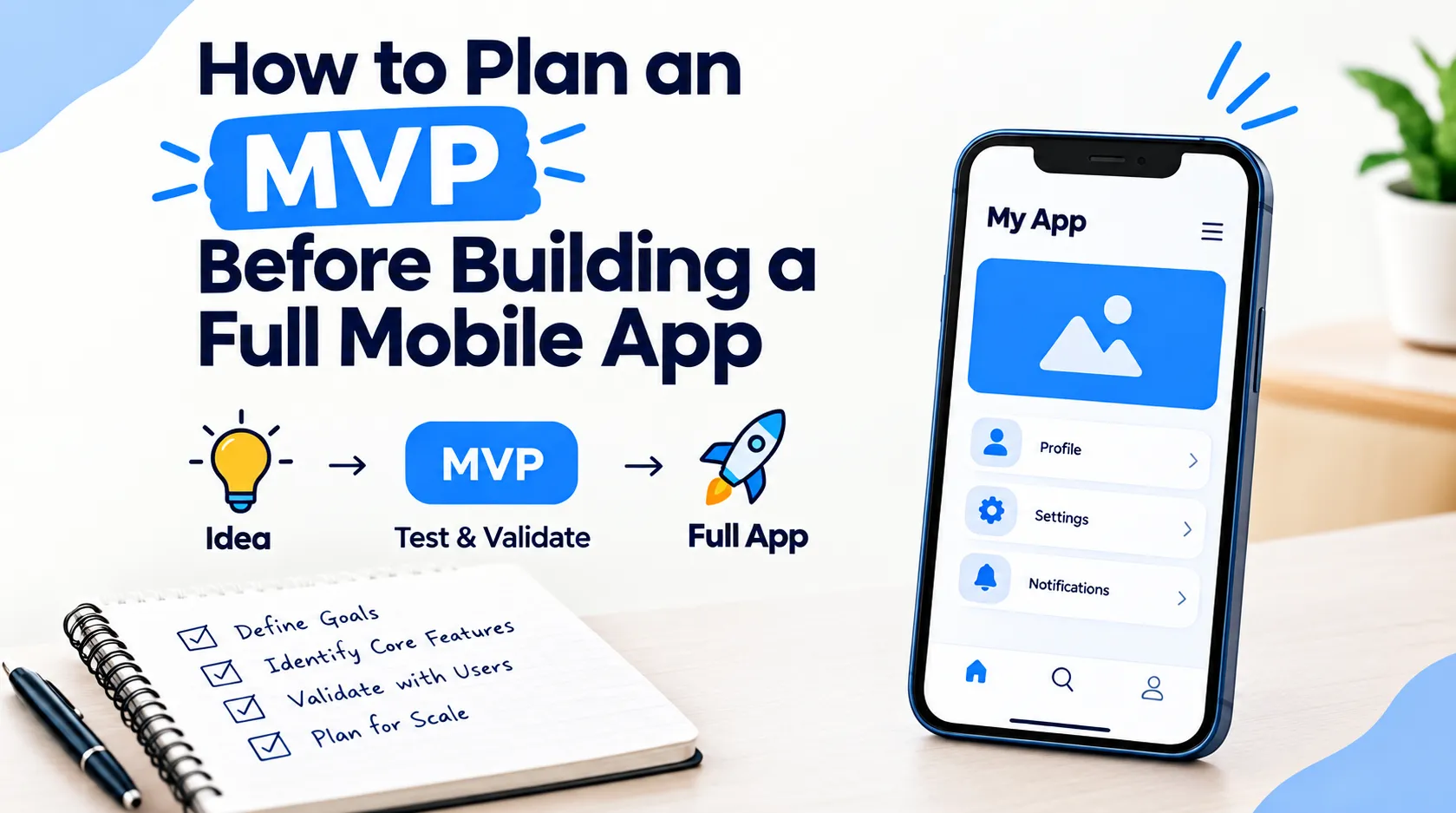
How Can an MVP Improve the Development Process?
An MVP focuses development on the core features needed to test the product idea with real users.
Instead of building every planned feature, the team identifies what the first version truly needs.
For example, a fitness app may eventually include workout plans, nutrition tracking, social challenges, live classes, wearable integrations, and personalized recommendations.
Its MVP may focus on user accounts, workout plans, progress tracking, and basic notifications.
Once users interact with the product, their feedback can guide future development.
What Should Businesses Prepare Before Hiring an App Development Team?
Businesses should prepare a clear description of the idea, target users, core features, preferred platforms, business goals, and available project scope.
You do not need to have every technical detail figured out.
A development team can help turn the business concept into technical requirements.
The more clearly the business explains the problem and desired outcome, the easier it becomes to plan the product.
How Can CoPixels Help With Mobile App Development?
CoPixels Media provides mobile app development services that cover the journey from initial concept through development, testing, deployment, and ongoing support.
Its mobile development services include iOS, Android, Flutter, React Native, and cross-platform development. The process covers strategic ideation, user-centered design, development, quality assurance, deployment, and continued support. (copixels.com)
This full-cycle approach allows businesses to work through the major stages of app development with a defined product strategy.
Whether the project starts with an MVP or a larger application, the development process should stay connected to the business goal and user experience.
What Is the Best Way to Start a Mobile App Project?
The best starting point is a clear product idea followed by structured planning.
Define the problem. Understand the users. Prioritize the features. Map the user journey. Plan the design and technology. Then move into development and testing.
A mobile app should not be built simply because an app seems like the next step for a business.
It should solve a real problem and give users a reason to return.
CoPixels Media helps businesses turn mobile app ideas into functional digital products through strategy, UI/UX design, development, testing, deployment, and ongoing support. Contact CoPixels Media to plan your mobile app and take it from idea to launch.
Frequently Asked Questions
What is the first step in mobile app development?
The first step is defining the app idea, target users, business goal, and core problem the application should solve.
Should an app be designed before it is developed?
Yes. Planning the user experience and interface before development gives the team a clear structure for building the application.
Is testing part of mobile app development?
Yes. Testing checks functionality, performance, compatibility, security, and the overall user experience before launch.
Can an app launch as an MVP?
Yes. An MVP provides the core features needed to test the product with real users before expanding the application.
Does a mobile app need maintenance after launch?
Yes. Apps need updates, bug fixes, performance monitoring, security improvements, and feature enhancements as the product develops.



No comment