
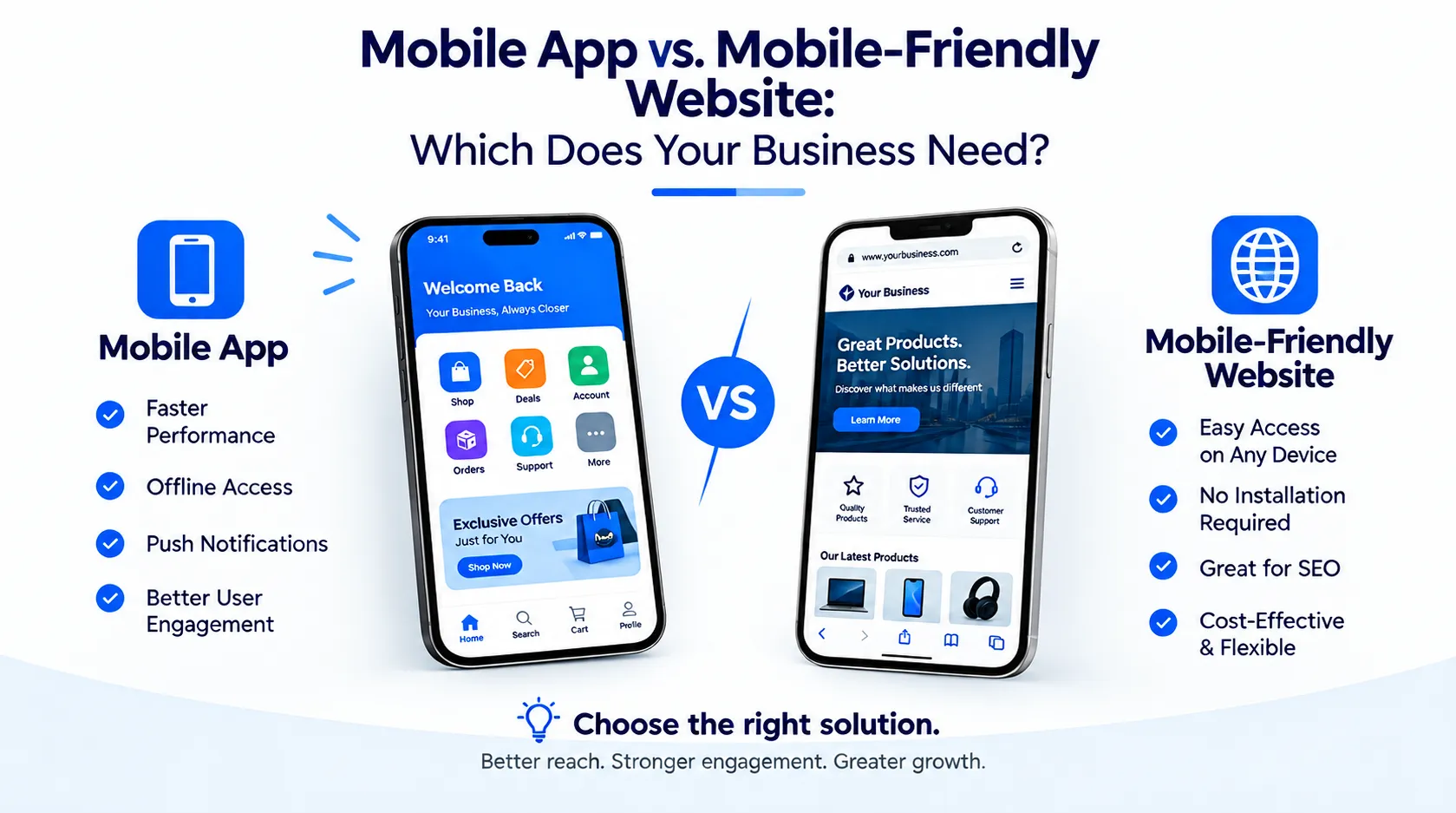
Custom Mobile App vs. Off-the-Shelf App: Which Is Better for Your Business?
A custom mobile app is the stronger choice when your business needs specific features, full control, and room for long-term growth, while an off-the-shelf app suits businesses that need standard features with less development work. The better option depends on what your business needs from its mobile product.
An off-the-shelf application comes with pre-built features and workflows. You choose a solution that already exists and configure it for your business.
A custom mobile app is built around your specific requirements. The design, features, integrations, user experience, and technical structure are planned for your business.
The difference matters because the app you choose can affect your customer experience, operations, budget, and future growth.
What Is a Custom Mobile App?
A custom mobile app is designed and developed specifically for one business or product.
The development process starts with your goals and user requirements. The team then plans the features, interface, architecture, integrations, and technology around those needs.
For example, a retail company may need an app connected to its existing inventory and customer systems. A standard application may not support the required workflow. A custom app can be designed around those specific processes.
This gives the business greater control over the final product.
What Is an Off-the-Shelf Mobile App?
An off-the-shelf mobile app is a pre-built solution designed for a broader group of businesses or users.
The core product already exists. Businesses can configure available settings, select plans, and start using the application without building the entire product from scratch.
Examples include standard appointment booking systems, CRM applications, employee management tools, accounting apps, and communication platforms.
They work well when a business needs common features and does not require a highly specialized user experience.
What Is the Main Difference Between Custom and Off-the-Shelf Apps?
The main difference is control and flexibility.
With an off-the-shelf app, the business works within the features and structure provided by the software company.
With a custom app, the business defines how the product should work.
A standard solution may provide customer accounts, notifications, and basic reporting. A custom application can connect those features with specific business workflows, databases, payment systems, APIs, or internal tools.
The choice comes down to whether your business needs a ready-made solution or a product built around its own requirements.
Which Option Is More Flexible?
A custom mobile app provides more flexibility because its features and workflows are built around the business.
Businesses can decide how customers move through the application and which functions matter most.
A custom ecommerce app, for example, may include a specialized product configurator, customer loyalty system, custom checkout flow, and integration with an existing inventory platform.
An off-the-shelf solution may provide some of these features. The business must work within its available configuration.
Which Option Is More Affordable?
An off-the-shelf app generally has a lower starting cost because the software has already been developed.
Businesses may pay a subscription or licensing fee rather than funding an entire development project.
Custom development requires investment in research, UI/UX design, development, testing, deployment, and ongoing maintenance.
The initial cost is only one part of the decision, though.
A low-cost solution that lacks important features may create additional software costs, workarounds, or process limitations later.
A custom application requires more upfront investment but gives the business ownership of a product designed around its specific needs.
Which Option Is Easier to Launch?
An off-the-shelf application is faster to launch because most of the product already exists.
The business usually needs to create an account, configure settings, add information, and train users.
A custom app takes longer because the product must move through planning, design, development, testing, and deployment.
That extra time gives the business more control over the final experience.
The right timeline depends on how important customization is to the project.
Which Option Gives You More Control?
A custom app gives your business greater control over its functionality, user experience, integrations, and future development.
With off-the-shelf software, the provider controls the product roadmap. New features depend on what the software company chooses to build.
A custom application follows the business roadmap.
This matters for companies with specialized processes or a product strategy that requires regular feature development.
Which Option Is Better for Branding?
A custom app provides greater control over branding and the customer experience.
The business can create its own interface, navigation, visual identity, onboarding process, and customer journey.
An off-the-shelf solution may offer branding options, but the overall interface and workflow remain connected to the original software product.
For customer-facing applications, this distinction can be important.
The app should feel like part of the business rather than a generic tool.
Which Option Is Better for Scalability?
A custom mobile app can be designed around the business’s expected growth and future technical requirements.
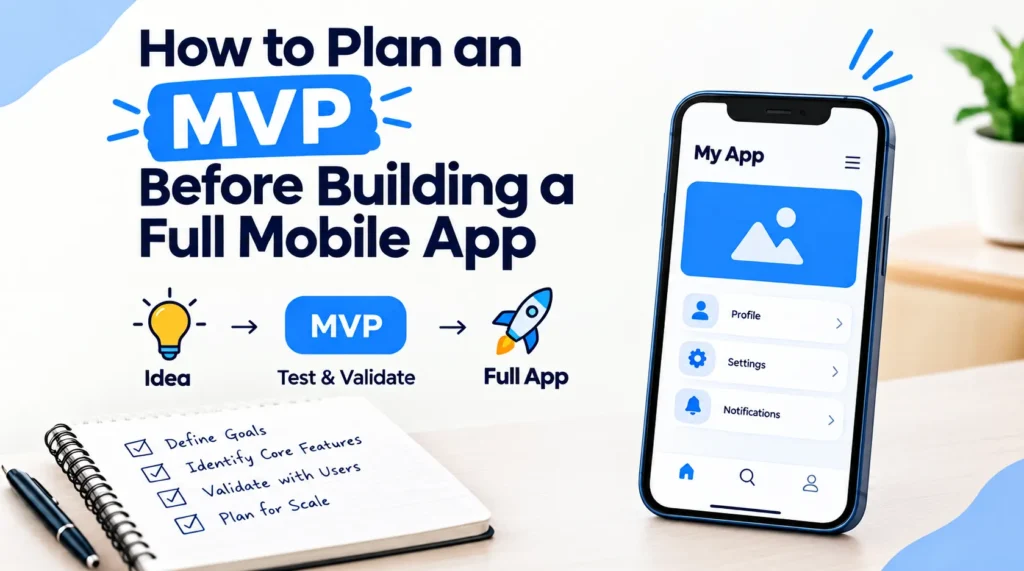
A small MVP can start with core functionality. Additional features can be introduced as the product gains users.
For example, an application may start with customer accounts and online purchases. Later versions may introduce subscriptions, loyalty programs, personalized recommendations, advanced analytics, or third-party integrations.
An off-the-shelf app may provide scalability within its existing platform. The business remains limited by the provider’s available features and technical structure.
What About Integrations?
Custom apps provide greater freedom when a business needs complex or specialized integrations.
Many businesses rely on several systems. These may include payment gateways, CRM platforms, inventory systems, accounting software, booking systems, APIs, or internal databases.
An off-the-shelf application may integrate with popular platforms through existing connections.
When a business needs an unusual integration or a specific data flow, custom development gives developers more control over how those systems communicate.
Which Option Is Better for Security?
Both options require strong security practices, but custom development gives businesses more control over how security requirements are built into the application.
A custom app can be designed around specific authentication, access control, data handling, encryption, and privacy requirements.
Off-the-shelf applications rely on the security architecture provided by the software vendor.
Businesses should evaluate how sensitive information is handled before choosing either option.
Security should be considered during planning rather than added as an afterthought.
When Should Your Business Choose an Off-the-Shelf App?
An off-the-shelf app makes sense when your business needs standard functionality and wants to start using the software quickly.
It may suit a business that needs common tools such as scheduling, basic customer management, internal communication, or standard reporting.
It is a practical choice when customization is not a major requirement.
There is no reason to build custom software when an existing product already solves the problem well.
When Should Your Business Choose a Custom Mobile App?
A custom app makes more sense when your business has specialized requirements that existing applications cannot support properly.
Custom development may be the better route when you need:
- A unique customer experience
- Specialized business workflows
- Custom integrations
- Advanced personalization
- A branded customer-facing application
- Full control over future features
- A product that will scale with the business
- Features that are not available in standard software
The strongest reason to build custom is not simply wanting something different. It is having requirements that need a purpose-built solution.
Can a Business Start With an MVP?
Yes, a custom mobile app can start as an MVP with only the core features needed to validate the product.
An MVP keeps the first version focused.
For example, a business planning a large marketplace app may eventually need advanced search, seller dashboards, loyalty features, recommendations, messaging, and analytics.
The first version can focus on registration, product listings, search, checkout, and order management.
Once users interact with the product, their feedback can guide future development.
Custom Mobile App vs. Off-the-Shelf App: Which Should You Choose?
Choose an off-the-shelf app when speed, standard functionality, and lower initial development work are your priorities. Choose a custom app when flexibility, control, specialized features, and long-term product growth matter more.
There is no universal answer.
A small business with straightforward needs may get everything it needs from existing software.
A business building a customer-facing digital product may need a custom experience that standard software cannot provide.
The right decision starts with the problem you need to solve.
How Can CoPixels Help Build a Custom Mobile App?
CoPixels Media provides custom mobile app development services for businesses that need applications built around their specific goals and users.
Its mobile app development services include iOS, Android, Flutter, React Native, and cross-platform development. The process covers strategic ideation, user-centered UI/UX design, development, quality assurance, deployment, and ongoing support. (copixels.com)
CoPixels can help turn a business concept into a structured product plan and develop the application around its required functionality.
The process can start with an MVP and expand as the product grows.
Build an App That Fits Your Business
The right mobile software should solve a real business problem. An off-the-shelf app works well when your needs match an existing solution. A custom mobile app makes more sense when your business needs greater control, specialized functionality, or a product designed for long-term growth.
Before choosing, compare the features you need today with the product you expect to build tomorrow.
CoPixels Media helps businesses plan, design, develop, test, and launch custom mobile applications built around their goals. Contact CoPixels to discuss your mobile app idea and development requirements.
Frequently Asked Questions
Is a custom mobile app better than an off-the-shelf app?
Not always. A custom app suits specialized requirements, while an off-the-shelf solution works well for standard business needs.
Is custom app development more expensive?
Yes, custom development requires more upfront work because the application is designed and built specifically for the business.
How long does a custom mobile app take to build?
The timeline depends on the number of features, design complexity, platforms, integrations, and testing requirements.
Can a custom app start as an MVP?
Yes. An MVP can include the core features needed to launch the product and gather real user feedback.
Can CoPixels build a custom mobile app?
Yes. CoPixels provides mobile app development across iOS, Android, Flutter, React Native, and cross-platform technologies.


No comment